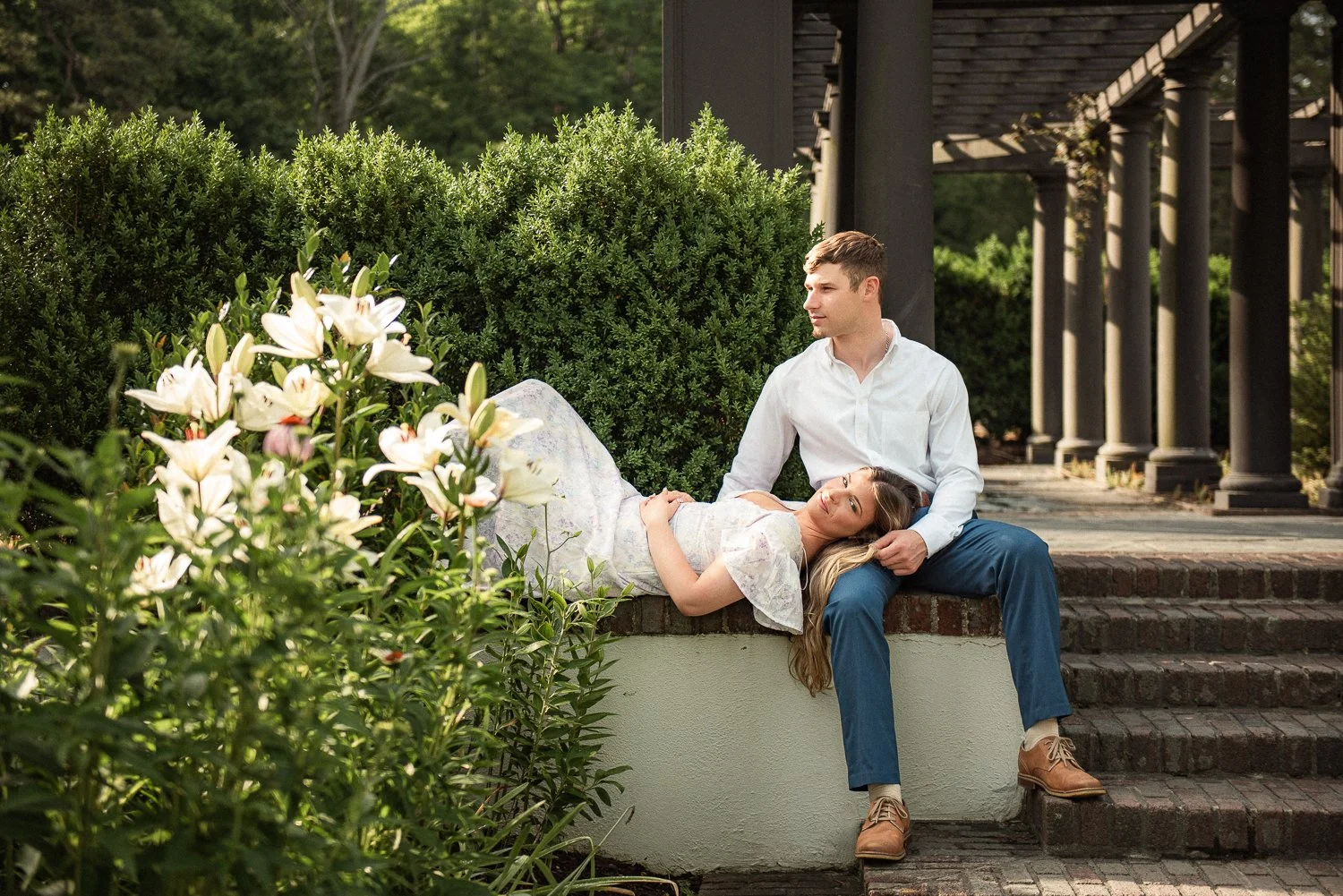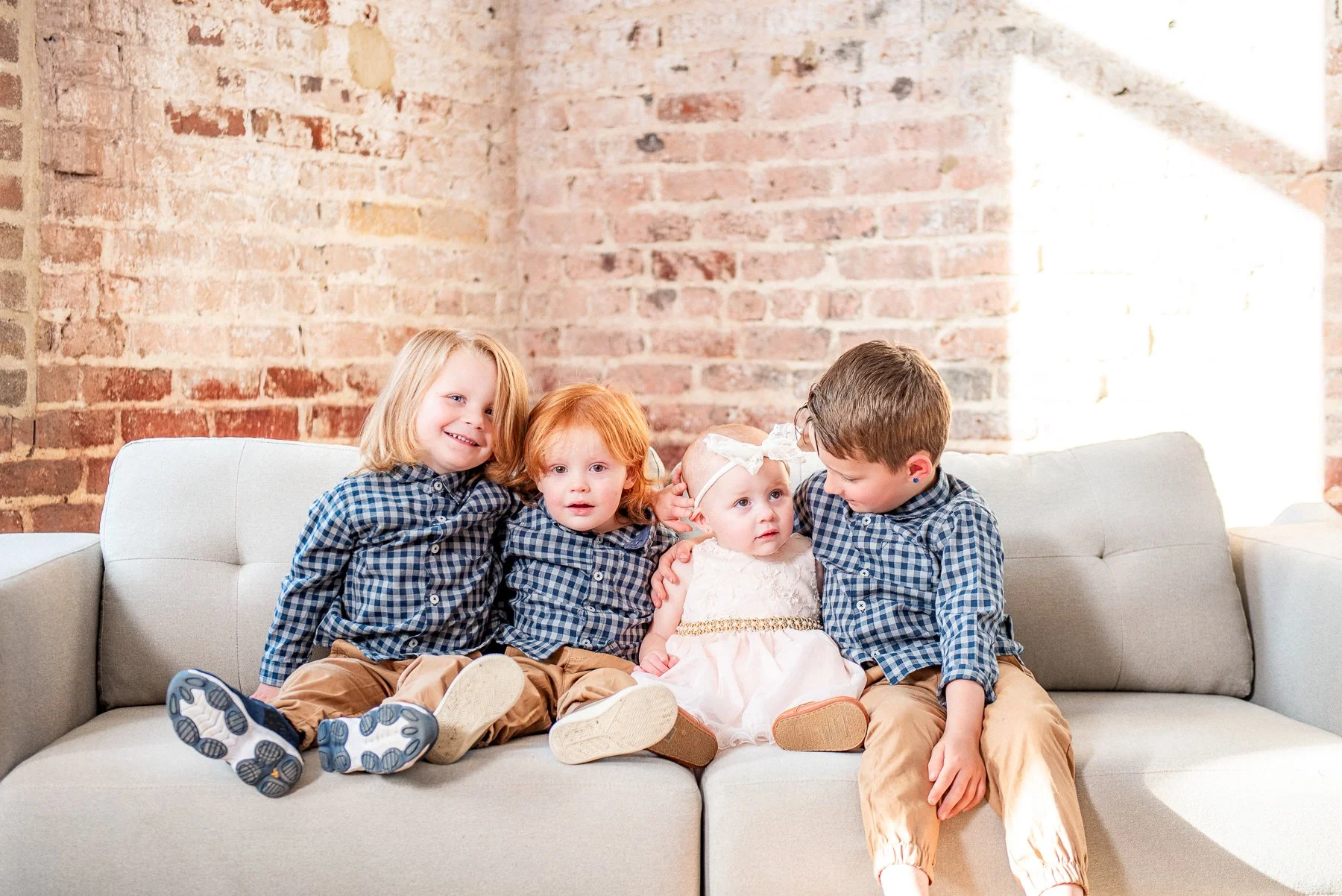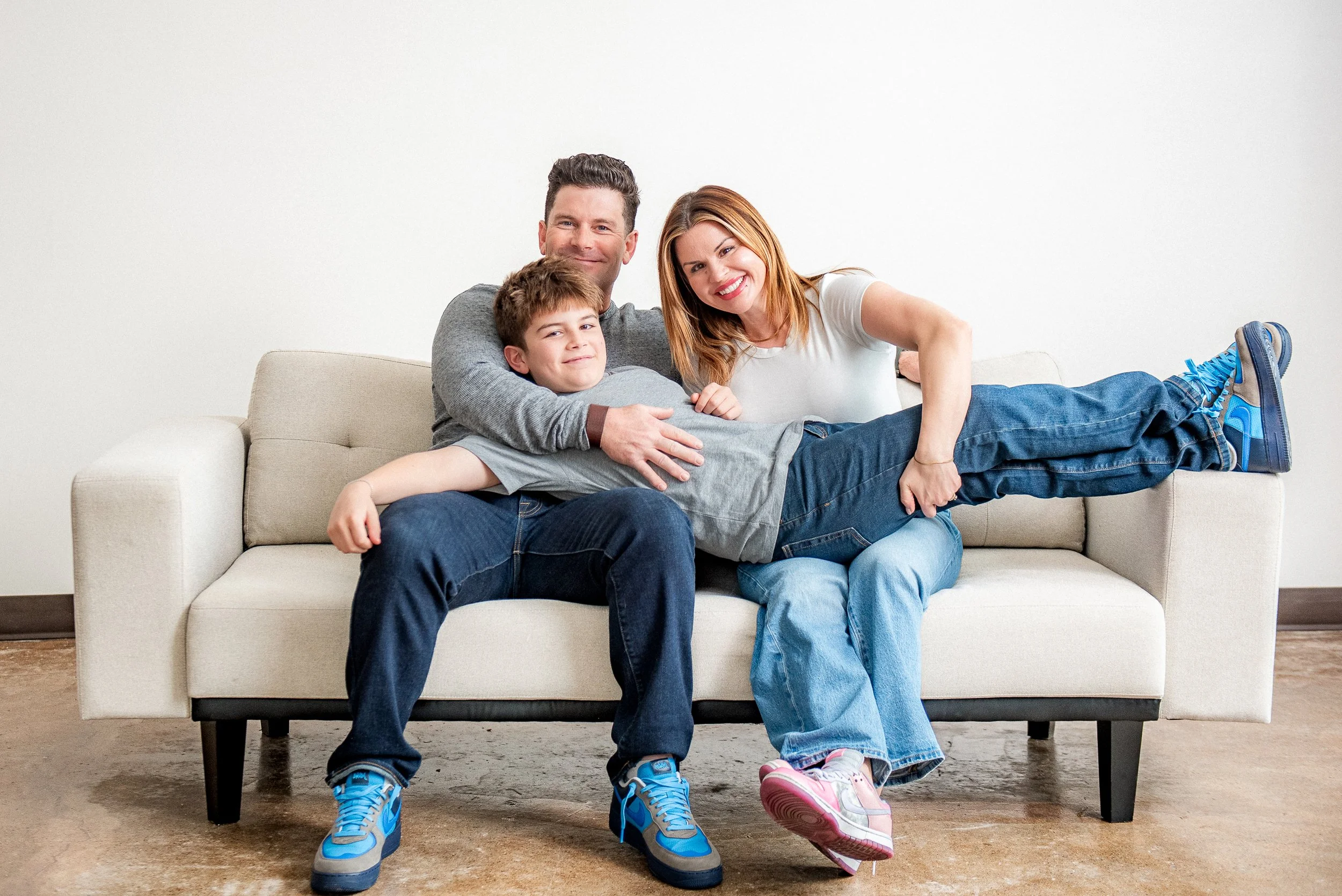
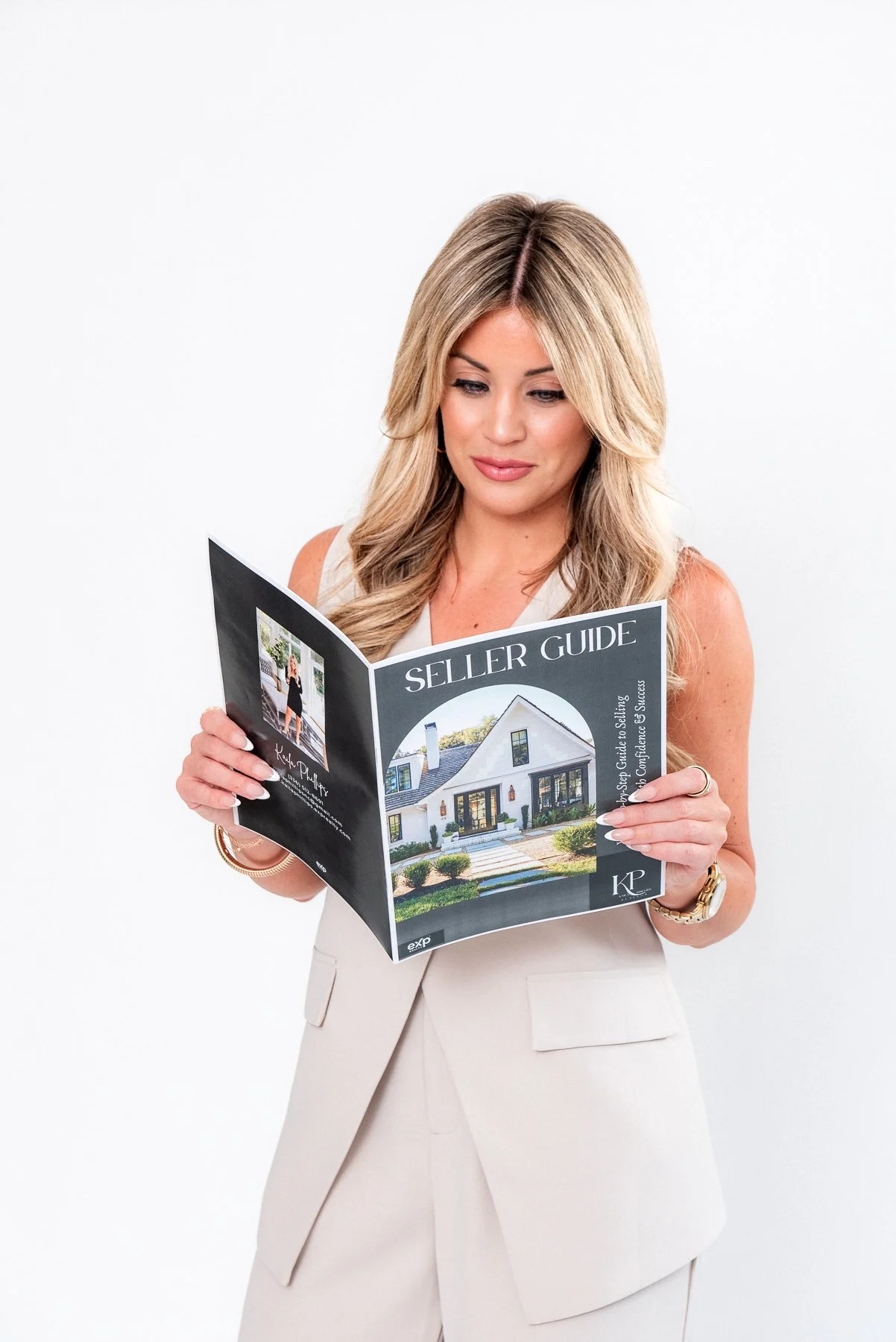
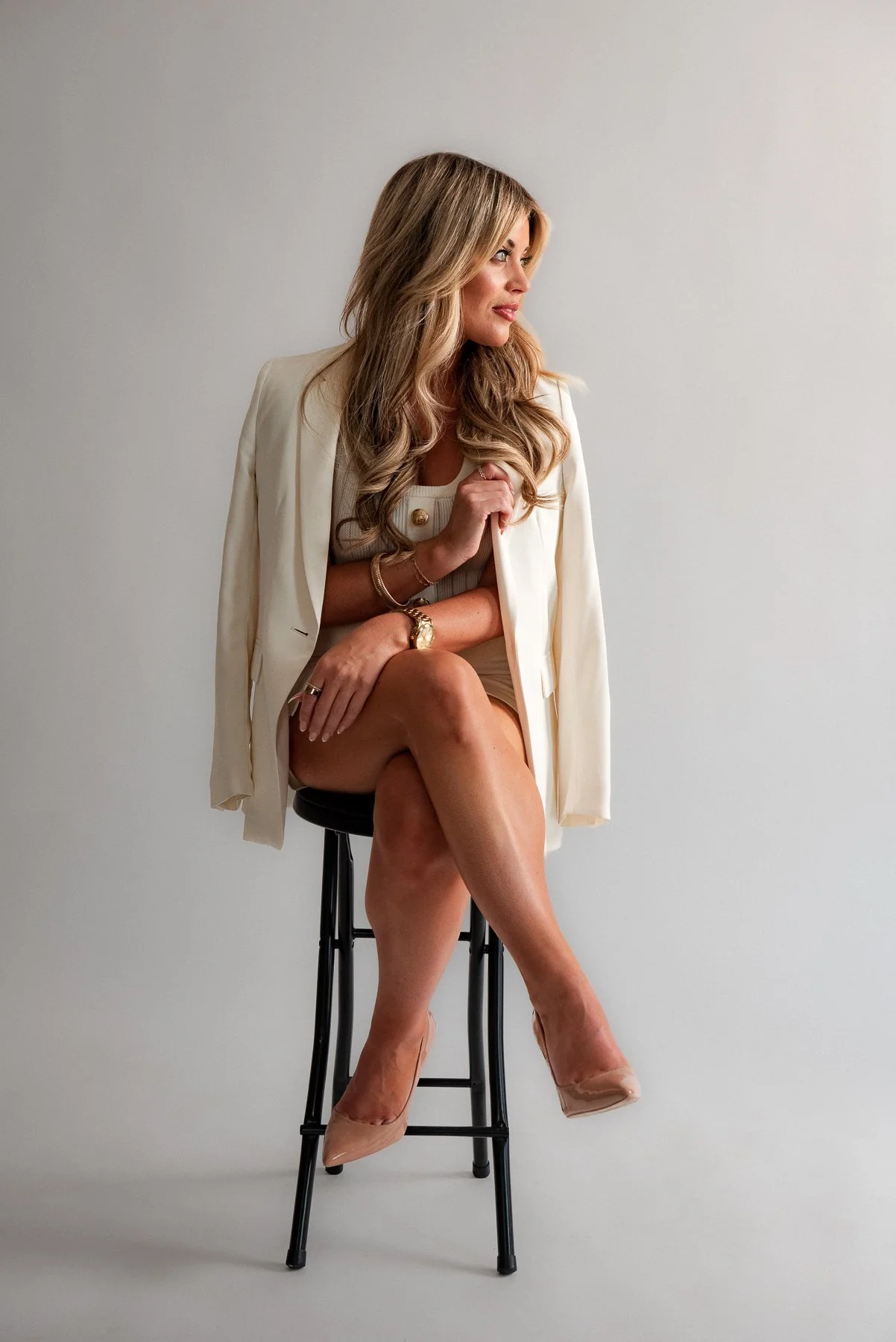

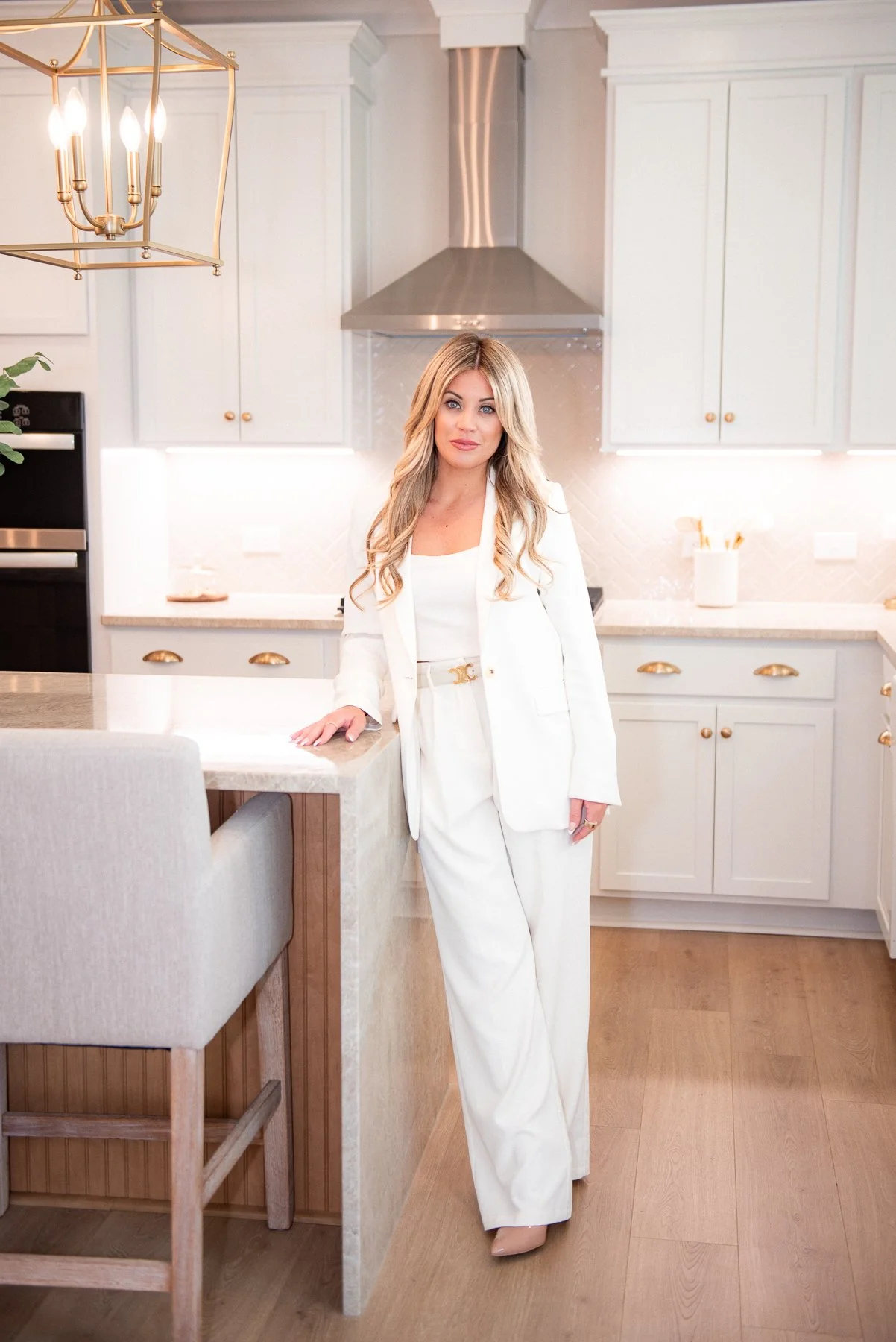

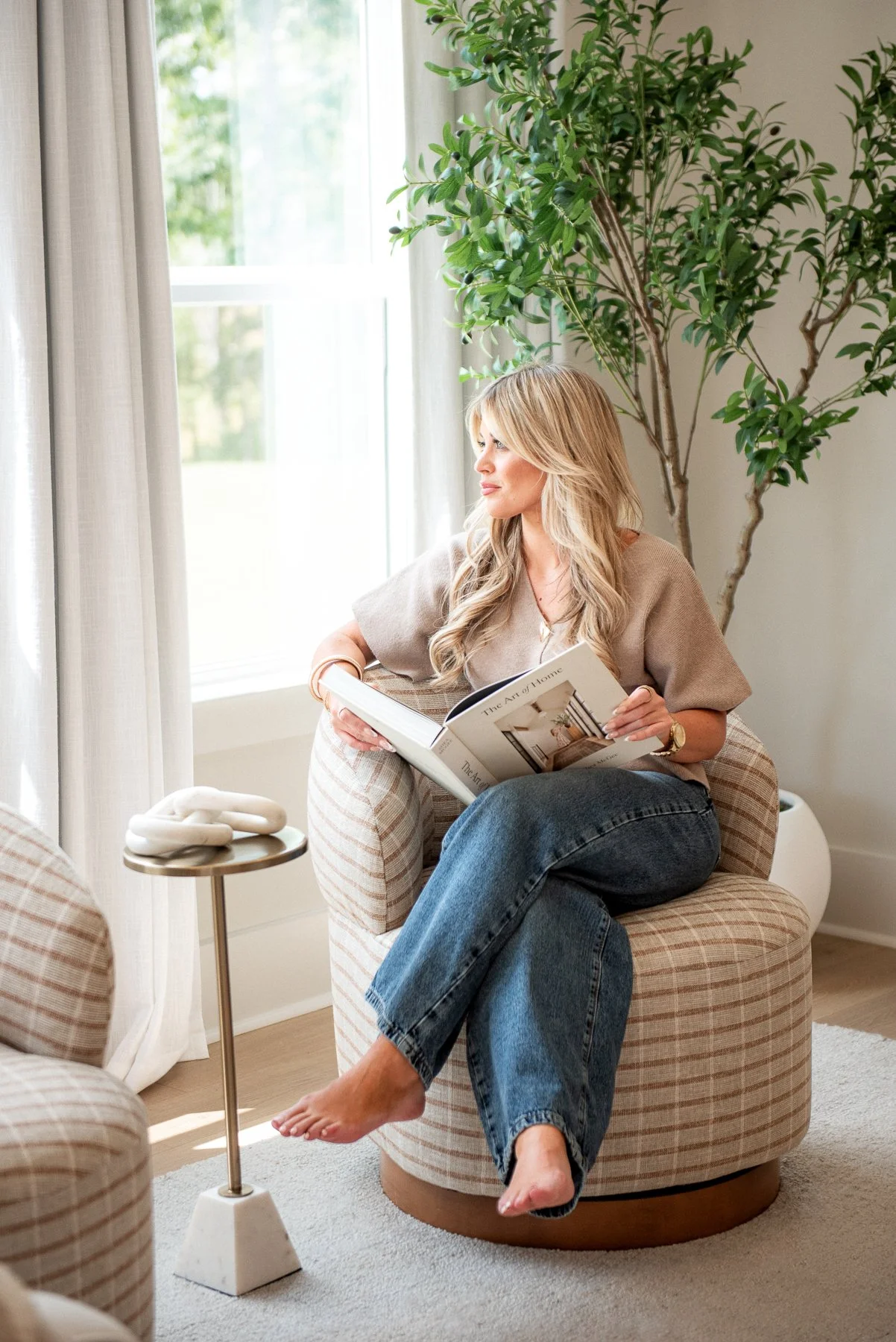

A studio backdrop and a real living room don’t photograph the same way, and that’s exactly the point. For a recent brand session with Kaila Phillips, a real estate agent building out her own personal brand, we split the gallery between two settings: a clean studio session at The Studio by Alison Tapp Photography, and a second setting at a model home. The combination is one I recommend often, and it’s worth explaining why.
Why One Location Isn’t Enough for a Brand Gallery
A brand gallery has to work harder than a typical portrait session. The same set of images might end up on a website, a business card, a listing presentation, and a dozen social posts, each with different needs. A single location, no matter how good it looks, tends to produce a gallery that feels repetitive after the first several images. Splitting the session across two settings solves that before it becomes a problem.
What the Studio Actually Does for Your Brand
A clean studio background keeps the focus entirely on you. There’s nothing in the frame competing for attention, no furniture, no clutter, no distracting backdrop. That makes studio images the most versatile part of a brand gallery: they crop well, they work behind text and logos, and they hold up as a headshot, a banner, or a printed piece without needing much editing around them.
What On-Location Adds That a Studio Can’t
A model home did something a studio background can’t: it gave Kaila’s gallery real-world context. For a real estate agent, a home isn’t just a nice backdrop, it’s the actual environment her clients live in. Sitting in a real living room, reading in a real armchair by the window, standing in a real kitchen, all of it ties the images back to the work she does every day. That kind of context is hard to fake in a studio, and it’s part of what makes a location session worth adding.
Creating a Look That Actually Represents You
Whether a session includes one location or several, the images only feel cohesive if a few things stay consistent throughout: a color palette that matches your existing marketing, wardrobe that feels like an elevated version of what you’d actually wear, and props or details tied to your real work, not generic styling props with no connection to what you do. Small, repeated choices like these are what make a gallery read as one brand instead of a collection of unrelated photos.
What You’ll Walk Away With
A blended session like this one gives you a gallery with actual range: polished studio portraits for the places that need something clean and simple, and on-location images for the places that benefit from real context. Her final gallery included a full mix from both settings, giving her options for whatever she needs to use them for next.
If you’re building out your own brand and want a gallery that actually represents what you do, reach out through alisontappphotography.com. I’d love to help you plan it.